
Kentucky History
Crigler Mounds: Adena Burial Mounds in Boone County
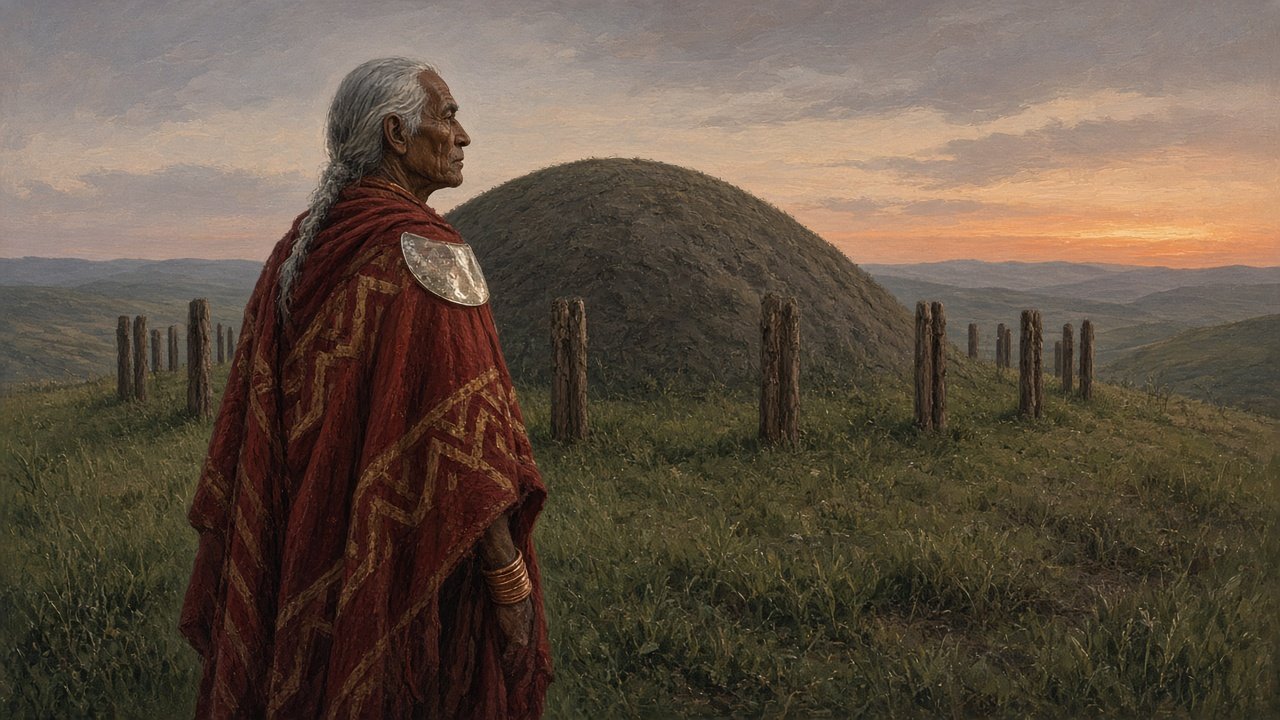
In Boone County, Adena people built two burial mounds, one large and one small, that archaeologists know as the Crigler Mounds, sites 15BE20 and 15BE27.
Visit it
Boone County
The exact place is withheld to protect the site.
They were raised more than 2,000 years ago by a people who left no written record. What they built still shapes how archaeologists think about the Adena culture (opens in a new tab).
The Adena world
The Adena tradition flourished in the central Ohio Valley from about 600 BCE to about 200 CE, though dates vary by region and some evidence runs earlier and later. Adena families lived in small, scattered settlements, hunted and gathered, and grew a few native plants. Many of them came together to build earthen mounds for their dead.
They also traded across long distances. Copper from the Great Lakes, mica from the Appalachians and marine shell from the coasts turn up in their graves. At another Boone County mound described in the same report, radiocarbon dates place mound building in the centuries before 100 BCE.
Two mounds, one circle
Both Crigler mounds started small. The smaller one, 15BE27, never got very big; the larger, 15BE20, grew as more burials and layers of earth were added. Beneath the large mound, excavators found the outline of a circle of paired posts 56 feet across. Inside it were a raised clay platform across from an entrance and what may have been supports for benches along the wall.
The mounds were excavated in the early 1940s by the University of Kentucky with Works Progress Administration labor. The 1943 report (opens in a new tab), with a chapter on the human remains, became one volume in a series on the Adena in Kentucky.
House, meeting place, or something else?
At other Adena mounds, such as the C. and O. Mounds, the report's author had read post circles as houses buried under the graves of important people. The Crigler circle did not fit. It was too wide to have been roofed, he admitted, though it might have been partly covered, and the mound held almost no everyday trash, such as broken pottery. So he called it a meeting place set apart from where people lived.
Later archaeologists went further. One reading treats circles like this as mortuary camps, places where the dead were prepared and mourned. Another suggests many were never roofed at all. Either way, the Crigler circle cast doubt on the idea that every Adena mound covered a family's house.
The people buried here
These were graves, and the people buried in them were the ancestors of living Native nations. Like most early digs, this one removed burials to a university collection. Under federal law today, institutions that hold such remains must consult with tribal nations about them.
Kentucky today
The Crigler Mounds are protected archaeological sites, and their locations are not public. The map shows them only at the county level in Boone County. The Robbins Mounds story tells of another group of Adena mounds in the same county.
Map
Sources and research
Cite this story
Cite this story
Published . Last revised .
Chicago
Snowden, Shannon. "Crigler Mounds: Adena Burial Mounds in Boone County." Kentucky History Drive. Published November 27, 2026. Last revised November 27, 2026. https://kyhistorydrive.com/stories/crigler-mounds-adena-burial-mounds-in-boone-county/.
MLA
Snowden, Shannon. "Crigler Mounds: Adena Burial Mounds in Boone County." Kentucky History Drive, published 27 Nov. 2026, last revised 27 Nov. 2026, https://kyhistorydrive.com/stories/crigler-mounds-adena-burial-mounds-in-boone-county/.